Leroy was just 13 when he moved to the UK from Jamaica. His grandfather was a pilot in the RAF and so Leroy and his family moved to Birmingham to find a new life. As a child he was very aware of growing up ‘under the Crown’, and British influence, and when he turned 16 he enlisted in the Reserves Army – a time he looks back on fondly for shaping his love of British culture.
“I took a lot of positives from that, I remember really seeing the country, we went camping in Scotland, Wales, all over. I learned about being British, the sense of humour. I’ve always wanted to give something back for that time,” he said.
Leroy’s heritage and passion for music led him from the Black Country to join an emerging scene in Europe where he had travelled during his time in the Army. He settled in Germany and Holland where he started being recognised as a ‘bit of an entrepreneur’. Having never touched drugs before Leroy was asked by African contacts if he could ‘get them a little something’, and so he became involved in largescale drug smuggling.
“I was a player, I was in a world of racing cars, money and drugs, and was ‘living the life’. I was well connected, I knew people,” he said.
In the 1980s at the ‘height of his success’ Leroy was arrested after an operation to break the smuggling ring. He was imprisoned for seven years for smuggling cannabis and it was while he was inside that his natural skills as a connector, peacemaker, and conversationalist were put to better use.
“I was awakened while I was there. My son was 11 at the time and I remember a phone call with him saying to me that he needed me.
“I was behind bars, I couldn’t be there for him, so I decided I wanted to do something positive, I wanted to help stop other people turning to a life of crime and ending up inside. That changed my life.”
Leroy’s period of enlightenment and realisation about the impact of his choices on his family, led to a growing spirituality, awareness of enrichment, love and how important they were to the community.
Around that time the Samaritans were launching a campaign to support prisoners with their mental health, by introducing a buddy system. Leroy was asked to look at the plans by his Governor and was essentially told he had to make it work.
“I was well connected inside and had ‘friends’. I was good at talking to people and so they asked me to see what I could do to help. Cheltenham Samaritans came to see us, they came to see me in a maximum security prison because they wanted prisoners to mentor other prisoners.
“I was a bridge for them, a way to break the status quo.”
The original Listener Scheme grew into the Stress Busters, a successful initiative led by Leroy to give men the chance to elevate their problems, to talk about them so they didn’t take over.
“I was doing creative writing by then and had a friend with a passion for art, so we brought those skills and interests together and got people interested. The Stress Busters became a really successful initiative.
“My greatest fear was all my creative knowledge going to waste when I was inside, but I was able to use it to help others. I knew then that I wanted to create something, I wanted to create a festival and be on the stage because I’ve got a message to tell.”
Thanks to good behaviour and his work launching and leading the Stress Busters, Leroy was ‘pushed out of prison early to put my life to good use’. He was given two and a half years parole and was under really tight scrutiny.
Asked if he was ever tempted to go back to a life of crime Leroy said:
“It took a lot of courage to establish the Stress Busters in prison, I said I wanted to use my life for good and support young people. I had various messages sent to me from people I knew before, but I didn’t look back. I wasn’t about to do anything I shouldn’t again,” he said.
After moving back to the Black Country Leroy said nobody would touch him until he met one man, Tony Morgan, a local accountant who trusted him and supported him into joining a wide range of community projects. Leroy was able to put his natural ability with people to good use.
“Being creative was a magical gift for me and I was able to use that to help others. I was introduced to a mentor and started youth engagement work. My vision was firmly fixed around the power of music and art and I was employed part-time in adult education, teaching DJ and MC classes.
“I was also allowed to drive around the community in the van, taking food to people. I worked with young people to support older ones in the community.
“We worked to develop the community there and deliver what people needed.”
He looks back on that time with pride.
“I was part of the team developing The Drum in Birmingham, a brilliant community space. I was sent a letter that said my dedication and my passion made the building come about. Everything I was involved in then was good, and positive. Heal is a continuation of that and I want to make it a success,” he added.
After initially working with young people in the West Midlands Leroy’s natural influence, and connections, were again called upon to support a mediation project to reduce gang and gun culture nationally. He was instrumental in moving people away from a life of crime and used to take them to see life in Holland.
“I took them out of Birmingham and showed them there was another way and other options.”
A growing culture of violence in Birmingham led Leroy and his partner to move to Shropshire to give their two children more opportunities. Although they settled in Telford, Leroy was attracted to the history, and culture in Shrewsbury where he has gone on to forge many community initiatives.
“I wanted my daughter Taisha to get a good education, so we moved to Telford and she went to Thomas Telford School. My son who was older also moved here with his daughter – for a better life.
“My partner and I built a life and joined the community. And I could really see how I could connect with Shrewsbury, even though it’s not recognised for diversity. I started going to Good Hands in Frankwell, that was a great way to interact with the community, Telford was too modern in comparison, Shrewsbury is the best place in Shropshire and the more I became involved in life the more I could see how central it was to bigger places – Manchester, Liverpool, Birmingham, Bristol.”
Again Leroy’s passion for bringing people together and the power of community was instrumental to building bridges with Shropshire’s Afro-Caribbean community.
“I was working with Angela Nelson, who was charged with celebrating diversity. And was invited to be part of something in Ironbridge. There’s lots of links with Jamaica – an iron bridge was also sent over there, I was a bridge into the Caribbean community.
“I’ve also been doing research with the Flaxmill and the Ironbridge Gorge Museums about the iron bridge in Jamaica. There’s so many links between our countries.”
In 2005 Leroy was diagnosed with colon cancer and after having surgery to remove the tumour he used an alternative therapy – mistletoe infusions – to manage his symptoms, but now he is faced with chemotherapy to ‘blast’ it.
“Looking back I can remember a time in the 80s when I was struck with major abdominal pains, I don’t know what it was but it stopped, the pain went back to sleep. Then the same thing happened in 2005.
“I’d been passing blood and one night was in real pain, I’d taken my partner’s medication by mistake and had a violent reaction. I went to the Doctors and he said it was time for a check-up, I’d never had one before. The pain was like I’d experienced in 1985.
“I had an endoscopy and the Doctor called me back and told me I had cancer of the colon. Time stood still for a while. I went through the process and a few people I knew suggested I look at mistletoe consultation, so I started having infusions.
“I had surgery to cut out the cancer and got my life back.”
In 2009 Leroy developed another problem with his liver and had to go to the Queen Elizabeth Hospital in Birmingham for them to remove another tumour. In 2014 he was diagnosed with cancer of the lymph nodes.
“I was with a Doctor in Telford who was interested in my time using mistletoe infusions. He arranged for an operation and when they opened me up the cancer hadn’t spread – they were astounded, possibly because of the mistletoe therapy.”
Mistletoe therapy is recognised as a complementary medicine used alongside conventional cancer treatments, that involves using extracts from the mistle plant to stimulate the immune system. It is believed to reduce the side effects of traditional cancer treatments like chemotherapy and radiotherapy. Leroy has been having twice weekly infusions – he previously had to travel to Kent to access them, but they are now available closer to home.
“More recently I was feeling good so I stopped using the mistletoe. I had no symptoms apart from lots of hiccups. Then in April I was in Ironbridge meeting a delegation about how we can link up with the bridge in Jamaica. And I fainted, I couldn’t move or breathe.
“The Doctor told me my red blood cells were low. I’d also been losing weight even though I was still eating. I’ve lived a healthy life, no meat or alcohol, and there was no way I thought my cancer had come back.
“They’ve told me they can’t cure it but they can manage it, so I’m having my first ever chemotherapy to blast the cells.”
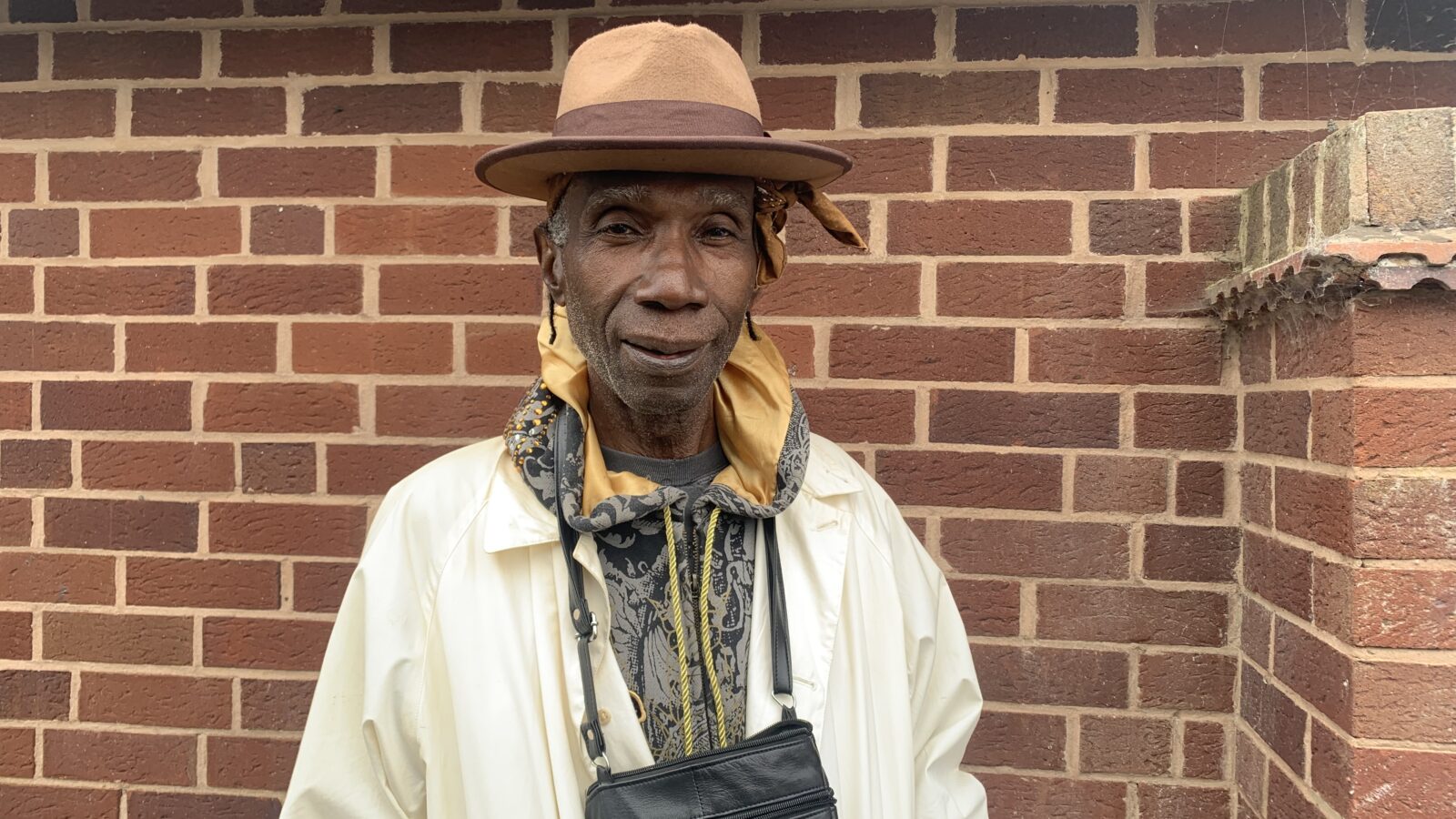
Leroy has established numerous events and organisations in the county to celebrate and recognise the power of community and achievement.
He is a non-executive director of The BLAC Awards (Bright Lights Awards Ceremony) that stands as a beacon for diversity, unity, and excellence within the grassroots African Caribbean communities in the UK. People join together annually at Shrewsbury Town Football Club thanks to his influence.
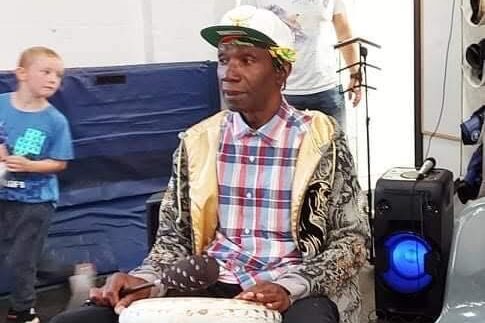
He is also a regular performer in a reggae band One and Twelve, and met his business partner Dene, who runs Unit 32, while performing. Together they decided to combine their talents and make something happen…
“Dene said he wanted to do something real, and I’ve spent my life working with young people and helping to bring communities together. So together we decided to create a festival. We tried various different things, some worked well, some not so much, but we kept going.”
Leroy was heavily involved with acoustic nights at Good Hands Café, delivering music and Caribbean food and decided to combine that to bring people together.
“Heal as it is now known was born during lockdown as a way of bringing people together through music and healing community rifts. It was created to be a pop-up and a movement, we can take it from town to town and use it to heal people. It’s about wellbeing and community. Healthy eating and living is important, I really want to make it work, it’s an authentic, therapeutic event.
“It celebrates the power of language and music. I’ve planted lots of seeds in my life to bring communities together, this one has huge potential,” he added.
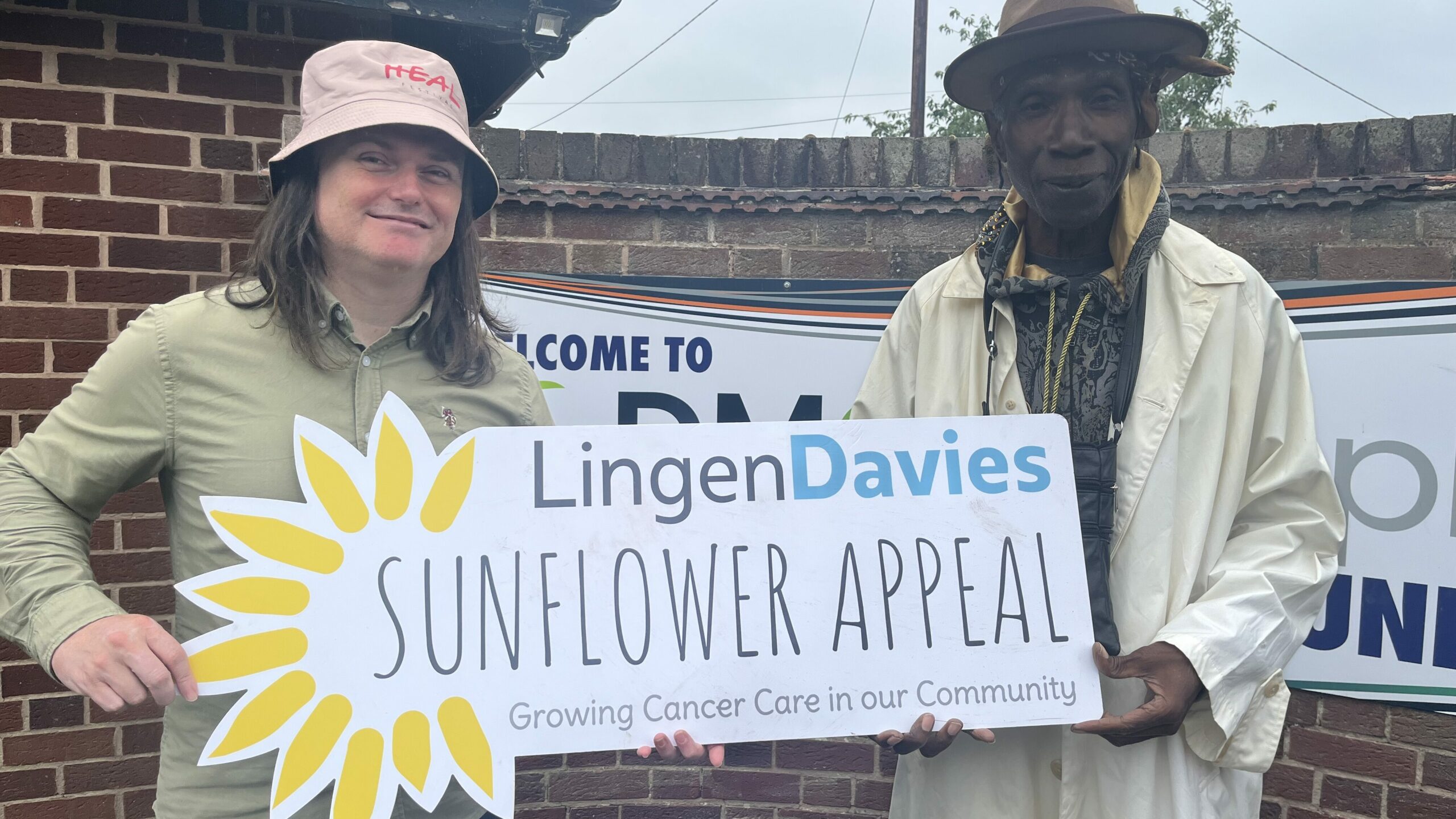
September 2025 will mark the fourth anniversary of the Heal Festival and Dene and Leroy have chosen to partner with Lingen Davies Cancer Support for fundraising, and because of the charity’s cancer awareness work, and wellbeing programme for patients living with and beyond cancer.
Leroy has his own cancer story and wants to create a powerful legacy for the charity.
“Everything we’ve done and achieved with HEAL has been generated by goodwill, we didn’t want it to become a corporate event but stay in the community. It should live up to its name and heal. I want to take it to the next level, there’s so much potential.”
Leroy is quite reconciled to his diagnosis and says he will continue to work on bringing people and communities together.
“There’s nothing to hold back now. I’m alright, anything can happen, I want to tell my story, and I want to develop HEAL.
“I really have lived a rich life. I’ve always enjoyed getting the best out of people, out of human beings,” he added.