Fran's Story
In her own words, Fran says, “My whole family is riddled with the big C” and because of that she is determined to do whatever she can to raise awareness of the signs of cancer and is supporting Lingen Davies in as many ways as she can.
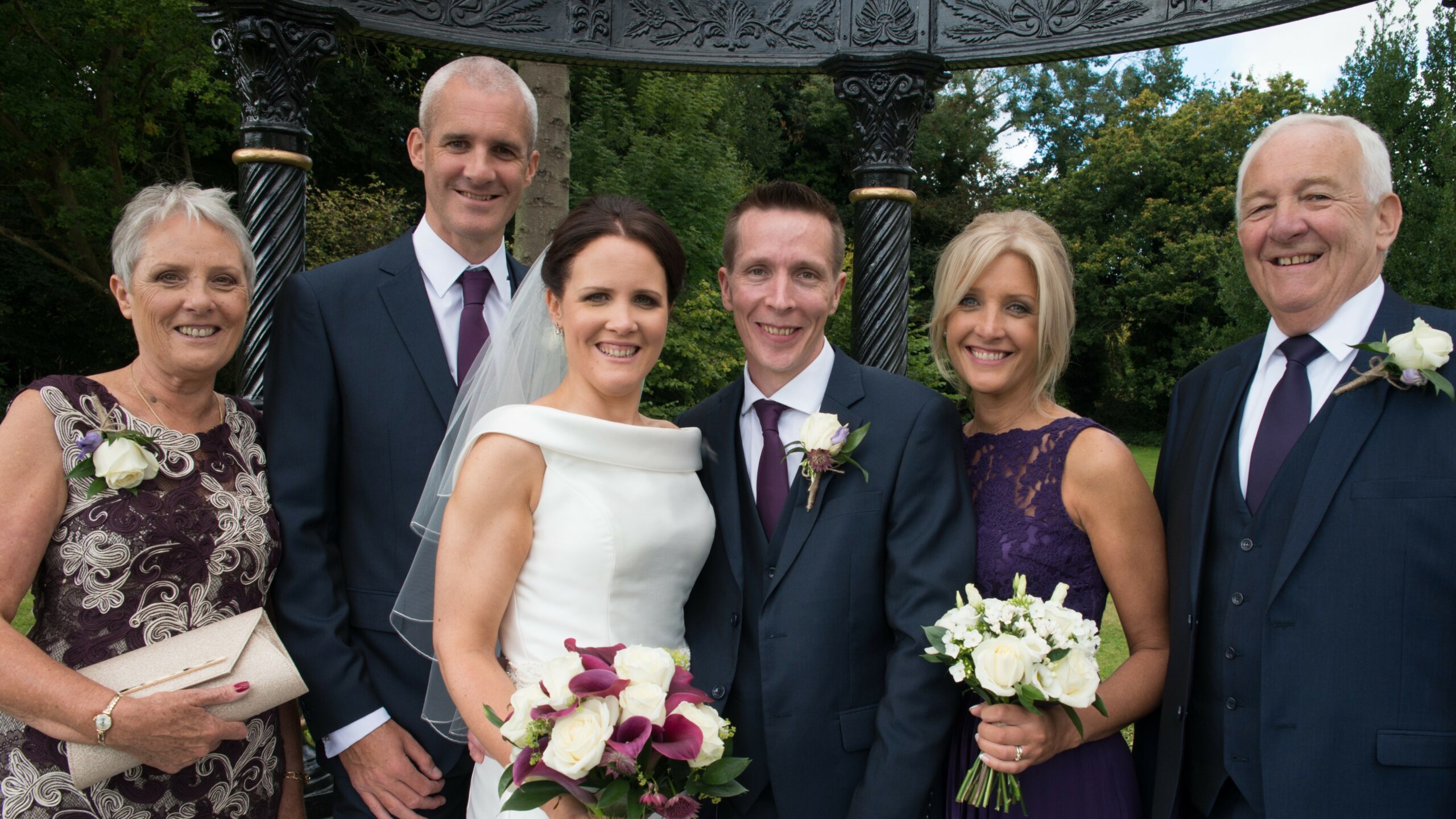
In her own words, Fran says, “My whole family is riddled with the big C” and because of that she is determined to do whatever she can to raise awareness of the signs of cancer and is supporting Lingen Davies in as many ways as she can.
Fran’s grandmother and Auntie both died of bowel cancer. Her mum, Mary, is one of five children and only two of them haven’t had cancer.
Mary was first diagnosed with Paget’s Disease – a rare cancer of the nipple which starts in the breast, but doesn’t present as a lump, instead it’s crinkled, sore, red skin around the nipple.
“Mum was being treated for eczema by a skin specialist, but she independently did some research online and found out that it could be a symptom of cancer. She returned to our GP surgery and spoke to a different Doctor who referred her to the breast clinic where she was immediately diagnosed with Pagets cancer.” said Fran.
Her mum had an operation to remove the nipple, but it was later found that cancer cells had been detected somewhere else in the breast which meant that a month later she had to have a full mastectomy. As with most cancer treatment, the side effects of chemotherapy and radiotherapy were horrific and her mum was extremely poorly. But thankfully, she held through.
Mary was also suffering with diverticular disease, a condition that affects the bowel, causing stomach pain and other symptoms. Due to her mother and sister both having bowel cancer she had a colonoscopy, and they found multiple polyps in her bowel. It was then decided to inform the genetics department in Cardiff to see if this was a hereditary condition. Due to the advances in technology since her mother and sister died, Mary was tested to see if she was carrying the APC (Adenomatous Polyposis Coli) gene which causes the bowel to be full of polyps which have the risk of later turning malignant.
Because of the family history of cancer and the fact Fran’s mum had lost her own mum and sister to bowel cancer, she had to undergo a total bowel removal and was given an ileostomy. Now Fran’s mum has one boob, no bowel and lives with a stoma.
Because Fran’s mum was carrying the gene, Fran, her brother Matthew, and her sister Anne all had colonoscopies and were tested for the gene.
“My sister and I thought we would have it, because it seemed to be the women affected in our family. However, we came back negative, but my brother was positive,” said Fran.
“He had a colonoscopy and multiple polyps were detected in his bowel. They chose to monitor him to see how quickly the polyps multiplied, which they did.
“Because of our family history he was advised to have his bowel out. It was a tough decision to have to make, but it was the right decision to avoid developing bowel cancer in later life.
“The operation had a huge impact on my brother’s lifestyle and he had to adapt to living with a stoma.”
Fran and her husband Dave (who own the bathroom fitting company – Ash Plumbing & Bathrooms) wanted to help make a difference to those living with a stoma.
Fran realised it wouldn’t just be her brother Matt who needed help like this and that others in a similar situation would need help to deal with this new way of life. Fran and Dave brainstormed what they could do – through their bathroom fitting company – to help make a difference.
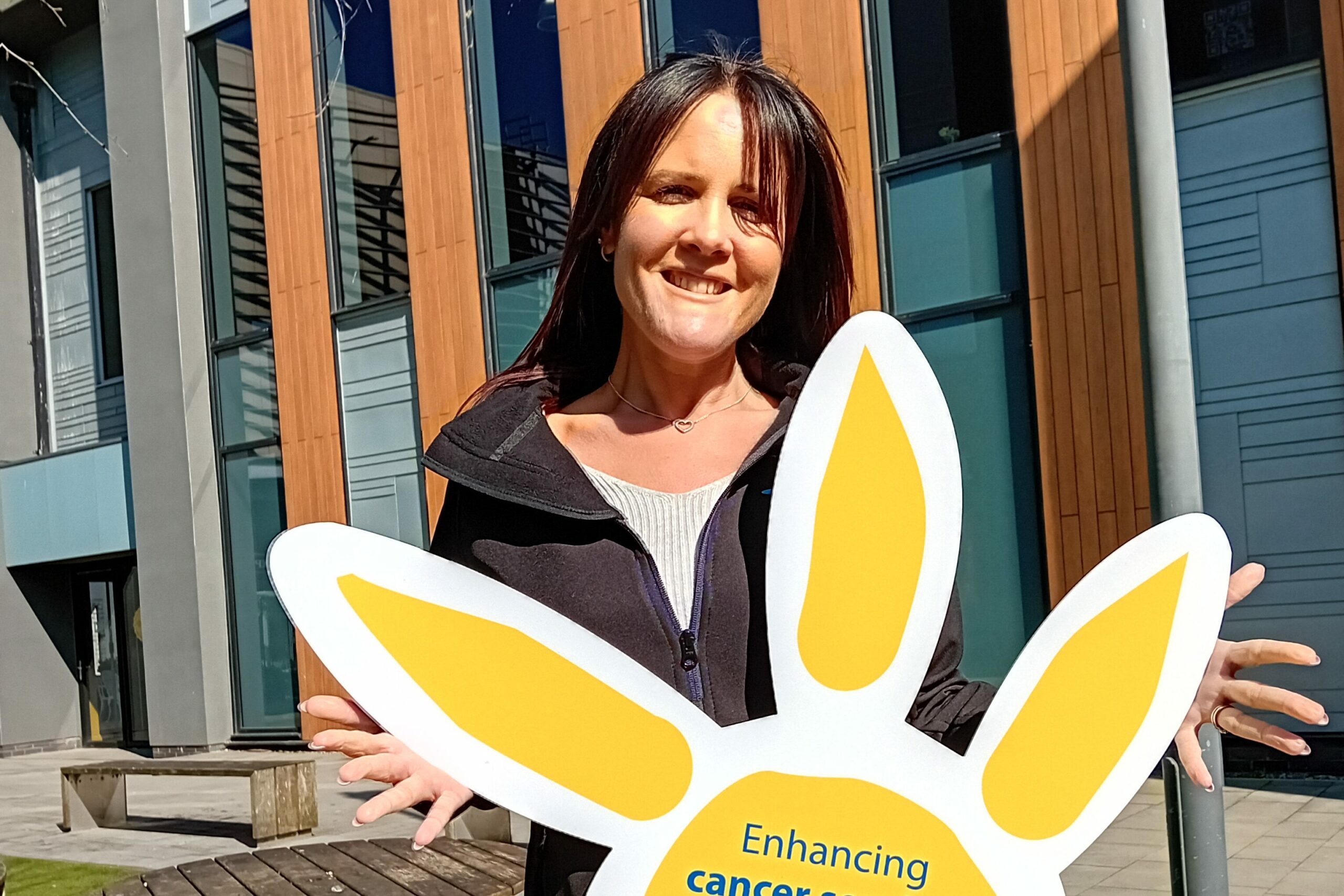
“We understand that when someone undergoes treatment for cancer even things like turning on a tap can be difficult. By changing taps from twist ones to a simple lift may sound like a minor adaptation, but it can make a big difference to someone’s life,” Fran said.
“So, we turned to Lingen Davies and asked what we could do to help. Through Ash Plumbing & Bathrooms we know we can make a difference to people’s lives,” she added.
Fran and her husband have become passionate about supporting the Lingen Davies Bins for Boys campaign after watching her brother try to navigate life with a stoma. After witnessing Matt walk half-way around a football stadium when they were at a music concert to access disabled facilities, Frans said she was inspired to take action.
“Nobody should have to walk miles to change a bag like that just because the male toilet near them just didn’t have the space or facilities he needed,” she said.
“When I told Matt about the Bins for Boys work, he agreed it was a great campaign… but he also made me realise that it goes further than having somewhere to hygienically dispose of waste. There’s often no space in male toilets to do what they need.
“Some buildings and premises may not have space for a larger toilet or a dedicated accessible facility, but they may have room for a shelf in a cubicle, or a peg on the back of a door etc.. and these things make all the difference,” she continued.
“We want to highlight that as a business we can do large adaptations for people, or we can make small adjustments if a company can’t do it themselves.
“Something like a hook on the back of a door or shelving in a cubicle is such a minor thing to install, but makes a massive difference to someone living with a stoma. It has a huge impact on that person who simply wants to change their bag.
“We’ve created some accessible packages to appeal to all. We have also contacted businesses like The Movement Centre, Severn Hospice and Home Instead – many adults and children need additional facilities in home bathrooms, and we can help them,” she added.
Fran’s brother is now adjusting to his new way of life. It can be challenging, but he knows the support he needs is always on hand.
Her mum is now in her early 70s and understandably lives each day thinking there’s a chance her cancer might come back. Her Dad has also been living with leukaemia since the late 2010s and it really affects his lungs. If he catches a cold he can’t breathe, he has to have regular immunisations and has to be very careful around people especially during cold and flu season.
Fran herself has had her own scares.
“I’ve had multiple lumps in my breasts that have all been tested. Thankfully there’s not been anything scary, but I keep a constant eye on them,” she said.
“For quite a few years I’ve had really bad stomach pains. I thought maybe it was diverticulitis inherited from my mum’s side. I finally pushed on my GP and said I wanted it checking. I was given a full MOT and was referred to the women’s clinic at Princess Royal Hospital. I had an ultrasound scan that found cysts on my ovaries. I then went on to have a laparoscopy in July 2023.
“When I came round from the anaesthetic the surgeon told me that they had found cysts and I had endometriosis. It explained a lot of the pain I had been suffering with. I then had an endometriosis ablation, but I can feel it building up again, so I keep an eye on that.
“It’s always a constant worry for me because of my family history. If find something unusual or if something’s not quite right, I always think ‘well..it’s finally got me’.
“I’m determined to give back and support others who are going through what we’ve been through. Living with our family history is challenging, but it’s made us the strongest family ever. That’s why, whenever something happens, whenever one of us is facing something, we just think, ‘right, here we go again… what’s the plan?’”